

Wildflowers Field Guide
While Big White is known for its powdery, white slopes in the winter, in the summer our alpine is a kaleidoscope of colour as far as the eye can see. From early July through mid-August, witnessing Big White’s rolling alpine meadows and experiencing the sweet scents of its delicate mountain blossoms is an absolute must-do summer activity!
About Alpine Meadows
Alpine meadows, considered one of Canada’s most beautiful natural phenomena, occur when alpine wildflowers make their spectacular appearance for a brief period of time during the spring and summer months, despite the harsh growing conditions of the alpine environment. Putting down roots in a growing environment that includes adversities like low temperatures, dryness, and ultraviolet radiation (not to mention being buried under 3 metres of snow all winter long!) – you could say that alpine wildflowers are some of the toughest and most unique blossoms in B.C.
Alpine meadows are so special because they aren’t made of the types of flowers you can find in your local florist's shop. No, the colourful wildflowers of Canada’s alpine meadows live a short, miraculous lifespan just a few months each summer. Plus, they are found only at the highest elevations in British Columbia, meaning a pair of hiking boots is usually required to admire their beauty! But trust us, the prismatic panorama of colours is worth every step. In fact, if you were to visit the same alpine meadow at different times throughout the summer, you would see a totally different display of colours month to month, as alpine blossoms all bloom at different times, creating a continually changing wave of colour across the high-altitude hills.
Ready to start exploring?
Here at Big White, we have an extensive network of alpine hiking trails that allow you to admire some of B.C.’s most beautiful native blossoms. The time is now to lace up your boots, grab your camera, and hit the trails to walk with the wildflowers. Listed below are a few alpine wildflower varieties that can be found in Big White’s sprawling mountain meadows at the top of Bullet Chair. Print this guide and take it on a trip into the alpine to count how many you can see!

Wildflowers Field Guide

Mountain Blossom Family
White Yarrow, Arctic lupins, Red Common paintbrushes, Arnica, and the Pasque flower are all members of Big White's colourful mountain blossom family.

Fireweed (Epilobium angustifolium)
Fireweed is a perennial with pink-purple flowers that grows from 0.5 to 3 m in height. Since its seeds require extreme heat to crack open, Fireweed commonly grows in areas where there has been a forest fire or other fire disturbance. In late summer, long seed pods spring open and release hundreds of seeds with tufted hairs, which are dispersed by the wind.
Fun Fact: Fireweed is the floral emblem of Canada’s Yukon territory.

Common Red Paintbrush (Castilleja)
Common Red Paintbrush has a striking red blossom that grows atop a straight, hairy stem, typically 20 to 60 cm tall. The upper part of the Common Red Paintbrush resembles a brush covered with bright dyes. One of the most eye-catching features in subalpine meadows.
Fun Fact: The Common Red Paintbrush goes by many names, including Prairie Fire, Grandmother's Hair, Painted Cup, Indian Paintbrush, Painted Lady, and Butterfly Weed.

Arctic lupin (Lupinus arcticus)
The Arctic lupin has grey-green leaves covered with soft, silver hairs and tall flower spikes made up of vibrant pea-like blossoms. It can grow anywhere from 30 to 80 cm high and is native to northwestern North America, from Oregon north to Alaska and Nunavut. It is also known as one of the most common wildflowers in B.C.
Fun Fact: The lupin is a member of the pea family

Scouler's hawkweed (Hieracium scouleri)
Bright and beautiful, the scouler’s hawkweed is a perennial that blooms from June to September and grows up to 70 cm in height. One plant will typically have 5 to 30 dandelion-like flowers on a stem covered in fine, short hairs.
Fun Fact: Hieracium derives from Greek hierax, which means hawk. Ancient Greeks believed that hawks strengthened their vision by eating this plant.

Leafybract aster (Aster foliaceus)
Leafybract asters are beautiful perennials found in subalpine environments and forest openings. Loose clusters of daisy-like flowerheads on sprawling stems can grow up to 60 cm tall, with multiple flowers per cluster. The word 'Aster' is of Greek derivation and refers to this flower’s star-like blossom.
Fun Fact: Asters are oftentimes a prime target for birds, bees and butterflies because they are fragrant and colourful.

Sitka Valerian (Valeriana sitchensis)
A common feature in forest openings, subalpine meadows and even in the alpine zone. This beauty can reach over a metre tall, with clusters of small white tubular flowers. This flower is native to northwestern North America, from Alaska and northern Canada to Montana to northern California.
Fun Fact: Indigenous communities cooked and ate the roots. Some tribes also used the roots for their medicinal benefits, helping with inflammation and aches.

Western Pasqueflower (Anemone occidentalis)
Both in bloom and in seed, the Western Pasqueflower is a spectacular sight in the subalpine meadows at Big White. A common perennial, which blooms early after snow-melt in moist subalpine meadows, with spectacular displays of white flowers above green leaves. In mid-summer, the flowers transform into very conspicuous, feathery green seed heads, changing to tan. In late summer, the wind separates and disperses the seeds.
Fun Fact: The seed heads are so distinctive that common names for this flower include mop-top and nature’s hippies.

Alpine Arnica
Arnica is a perennial plant of the sunflower family. It gets its name from its soft, hairy leaves – like lambs’ ears – from the Greek word arni or “lamb”. It has large, showy yellow blossoms with long ray florets.
Fun Fact: Homeopathic preparations of Arnica are widely marketed and used for ailments such as sprains, bruising, and osteoarthritis.

Discover our history, explore our trails, camp, swim in our rivers & lakes.
Visit boundarybc.com to start planning your adventure.
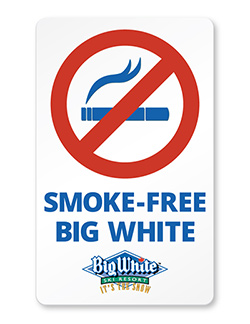
Smoking of any kind (including tobacco, marijuana, e-cigarettes and vaporizers) is strictly prohibited anywhere on Big White Ski Resort property outside of designated smoking areas. Applies to summer and winter seasons. Mountain Safety Info